San Diego to Death Valley: Drive, Furnace Creek & Top Sights
Death Valley is about 5 to 6 hours from San Diego by car, roughly 280 to 340 miles to Furnace Creek depending on the route you take. Go between November and March, base yourself at Furnace Creek, and you can see the salt flats, badlands and dunes in two full days without fighting dangerous heat.
The drive from San Diego
There are three sensible ways to get there, and all of them end with long, empty desert highway. Fill up and stock water before you leave the last big town.
Inland via US-395 (avoids Los Angeles)
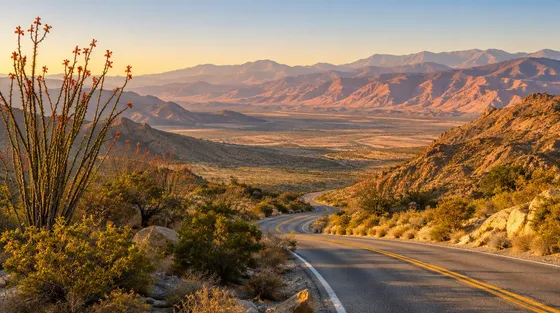
Take I-15 north through Escondido and Temecula, switch to I-215 through Riverside and San Bernardino, rejoin I-15 over Cajon Pass and exit onto US-395 north. Follow 395 up the Owens Valley side to Olancha, then turn east on Highway 190, which drops into the park past Panamint Springs and Stovepipe Wells. This works out to about 280 miles and a bit over 5 hours, and it enters from the west, so you see the Panamint Valley and Father Crowley Vista on the way in.
Via Baker and Highway 127
Stay on I-15 north past Barstow to Baker, then take Highway 127 north through Shoshone and turn west on Highway 190 at Death Valley Junction. This brings you in from the southeast, close to Dante’s View and Zabriskie Point.
Through Los Angeles
Going up I-5 and I-405, then Highway 14 to US-395, is about 340 miles and 6 hours on a good day. It only makes sense if you are already in LA.
Whichever route you choose, cell service disappears for long stretches. Download offline maps before you go.
Fees and current road closures
The entrance fee is $30 per private vehicle for 7 days, $25 per motorcycle, or $15 per person on foot or bicycle (under 16 free). The park is cashless, so bring a card. You can pay at the Furnace Creek Visitor Center or Stovepipe Wells Ranger Station, at machines at spots like Zabriskie Point and Badwater, or buy a digital pass on Recreation.gov before you leave San Diego.
Flood damage is the big variable here. As of early November 2026, the park’s conditions page lists these closures:
- Scotty’s Castle and Bonnie Clare Road: closed for flood recovery, no pedestrian access, no reopening date.
- Titus Canyon Road: closed for flood repairs, reopening anticipated May 2027.
- Darwin Falls Road: closed, likely until summer 2027 (you can park on the CA-190 shoulder and walk in).
- Beatty Cutoff and Cottonwood/Marble roads: closed after flooding at the start of November 2026.
- Emigrant Campground: closed indefinitely for water system repairs.
Storms in the desert can close roads overnight, so check the page the morning you drive.
Furnace Creek: where to stay, eat and shop
Furnace Creek is the center of the park, with the main visitor center and the resort now branded The Oasis at Death Valley. Older maps and guides call these places the Furnace Creek Inn and Furnace Creek Ranch; the current names are The Inn at Death Valley, the historic upscale hotel on the hill (opened 1927), and The Ranch at Death Valley, the more casual, family-style side down on the flat. The Oasis also runs Fiddlers’ Campground for RVs and tents.
The Ranch is where most visitors end up for supplies. It has:
- The General Store for groceries, snacks, ice, drinks and souvenirs. This is the store searchers often call the Furnace Creek General Store.
- The Ranch 1849, the buffet-style restaurant.
- The Last Kind Words Saloon for drinks and dinner.
- Coffee & Cream for coffee and ice cream.
- A spring-fed pool kept at 87°F, open 8 a.m. to 11 p.m.; day passes are sold at the Ranch registration desk.
- The 18-hole Furnace Creek Golf Course, at 214 feet below sea level.
If you are looking for the 49’er Cafe, it no longer appears among the dining options listed by the park or The Oasis. The Ranch 1849 and the saloon are the current sit-down choices at the Ranch, and The Inn has its Dining Room and Pool Cafe.
Outside Furnace Creek, Stovepipe Wells Village has the Toll Road Restaurant, Badwater Saloon and a general store, and Panamint Springs Resort on the west side serves breakfast, lunch and dinner year-round. Services inside the park are limited and far apart, so fill up the tank before you enter.
Best time to go
The National Park Service puts it simply: winter and spring are very pleasant. Average highs at Furnace Creek:
| Month | Avg high | Avg low |
|---|---|---|
| November | 77°F | 48°F |
| December | 65°F | 38°F |
| January | 67°F | 40°F |
| February | 73°F | 46°F |
| March | 82°F | 55°F |
| April | 90°F | 62°F |
| July | 116°F | 88°F |
Winter nights get cold, so pack layers even if San Diego is warm. Holiday weekends in the cool season are the busiest times, so book rooms early. Summer highs often top 120°F in the shade, and the world’s hottest recorded air temperature, 134°F, was measured at Furnace Creek in July 1913.
Top sights for a first visit
Badwater Basin
The lowest point in North America at 282 feet below sea level. A short walk of about a quarter mile out onto the salt flat takes you to the white polygon salt patterns. Go early or late for softer light and cooler air.
Artists Drive and Artists Palette
A one-way, 9-mile scenic loop off Badwater Road that takes 25 to 45 minutes. The Artists Palette stop shows streaks of green, pink and purple in the hillside, best in late-afternoon sun.
Devils Golf Course
A field of jagged, crusted salt formations a short drive off Badwater Road. Stand still on a warm day and you may hear faint pings as the salt crystals expand and contract.
Zabriskie Point and Golden Canyon
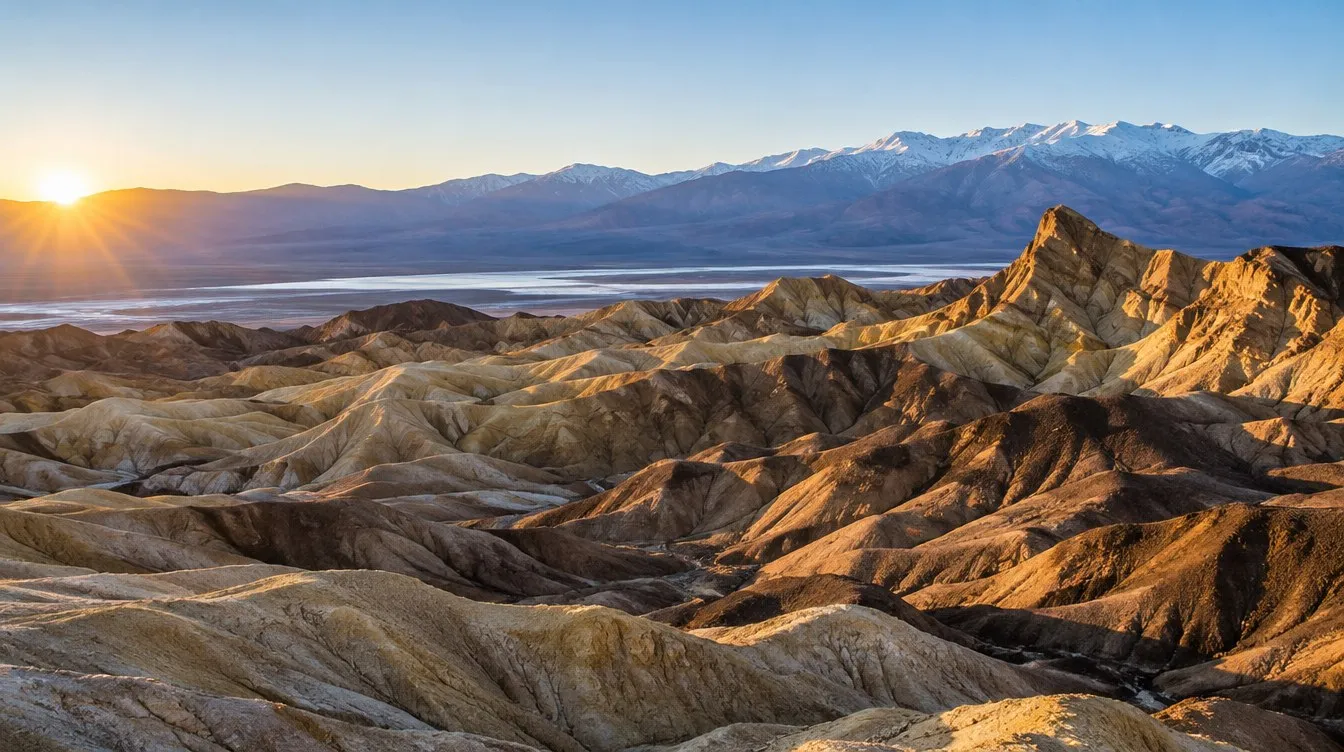
Zabriskie Point is the classic sunrise viewpoint over golden badlands, a few minutes from Furnace Creek on Highway 190. Golden Canyon, just below it, is a good morning hike through the same colorful formations, but only in cool weather.
Mesquite Flat Sand Dunes
Near Stovepipe Wells, the most accessible dunes in the park. Walk out at sunrise or sunset when the ripples and shadows are sharpest; midday light is flat and the sand gets very hot.
Dante’s View
A paved road climbs from Highway 190 to a viewpoint high in the Black Mountains, looking straight down onto Badwater Basin with the Panamint Range opposite. It is often noticeably cooler up top.
Heat and desert safety
This is the part not to skip. The park’s summer safety advice boils down to: stay on paved roads and close to your car, carry extra water in the vehicle, stay with your car if it breaks down, bring a real spare tire and the tools to change it (tow trucks can be hours away), and tell someone who is not on the trip where you are going. If you feel dizzy, nauseated or headachy, get out of the sun, drink water or a sports drink and wet your clothing.
Even in winter, carry more water than you think you need, keep the gas tank above half, and do not rely on your phone for navigation. In summer, do your walking at dawn and treat the rest of the day as a driving tour.
Who it suits and how to pair it
Death Valley suits road-trippers, photographers and anyone who likes big, quiet landscapes. Kids usually love the dunes and the salt flats; long hikes are best left for cool months. It also pairs well with other desert trips: Zion National Park is a long drive further northeast via Las Vegas, and closer to home, Anza-Borrego offers a similar badlands-and-wildflowers feel in a weekend. Before you leave, check the San Diego weather contrast; a 70°F day on the coast can mean very different conditions in the desert.
Frequently asked questions
How far is Death Valley from San Diego?
Furnace Creek, the park's hub, is roughly 280 to 340 miles from San Diego depending on route, or about 5 to 6 hours of driving. The inland route via I-15, I-215 and US-395 avoids Los Angeles; the route through Baker on I-15 and Highway 127 is another common option.
What is at Furnace Creek?
Furnace Creek has the park's main visitor center plus The Oasis at Death Valley, which is two properties: The Inn at Death Valley and The Ranch at Death Valley. The Ranch has the General Store, the Last Kind Words Saloon, The Ranch 1849 restaurant, Coffee & Cream, a spring-fed pool and the Furnace Creek Golf Course.
Is the 49'er Cafe at Furnace Creek still open?
The 49'er Cafe no longer appears in the current dining lists from the park or The Oasis at Death Valley. Dining at The Ranch is now The Ranch 1849, the Last Kind Words Saloon and Coffee & Cream, with the Inn Dining Room and Pool Cafe at The Inn.
What is the best time to visit Death Valley from San Diego?
November through March is ideal, with average Furnace Creek highs from the mid-60s to low 80s °F. From May through September highs regularly top 100°F and can pass 120°F, so summer visits should stick to paved roads and short stops near the car.
How much does it cost to enter Death Valley National Park?
The entrance fee is $30 per private vehicle for 7 days, $25 per motorcycle, or $15 per person on foot or bicycle. The park does not accept cash; pay by card at the Furnace Creek Visitor Center or Stovepipe Wells, at self-pay machines, or buy a digital pass on Recreation.gov in advance.
Is Scotty's Castle open?
No. Scotty's Castle and Bonnie Clare Road remain closed for flood recovery, with no access even on foot and no announced reopening date.
Hours, prices and event dates change. Confirm with the venue or organizer before you go.