La Jolla Cove & Children's Pool: Seals, Rules and Parking
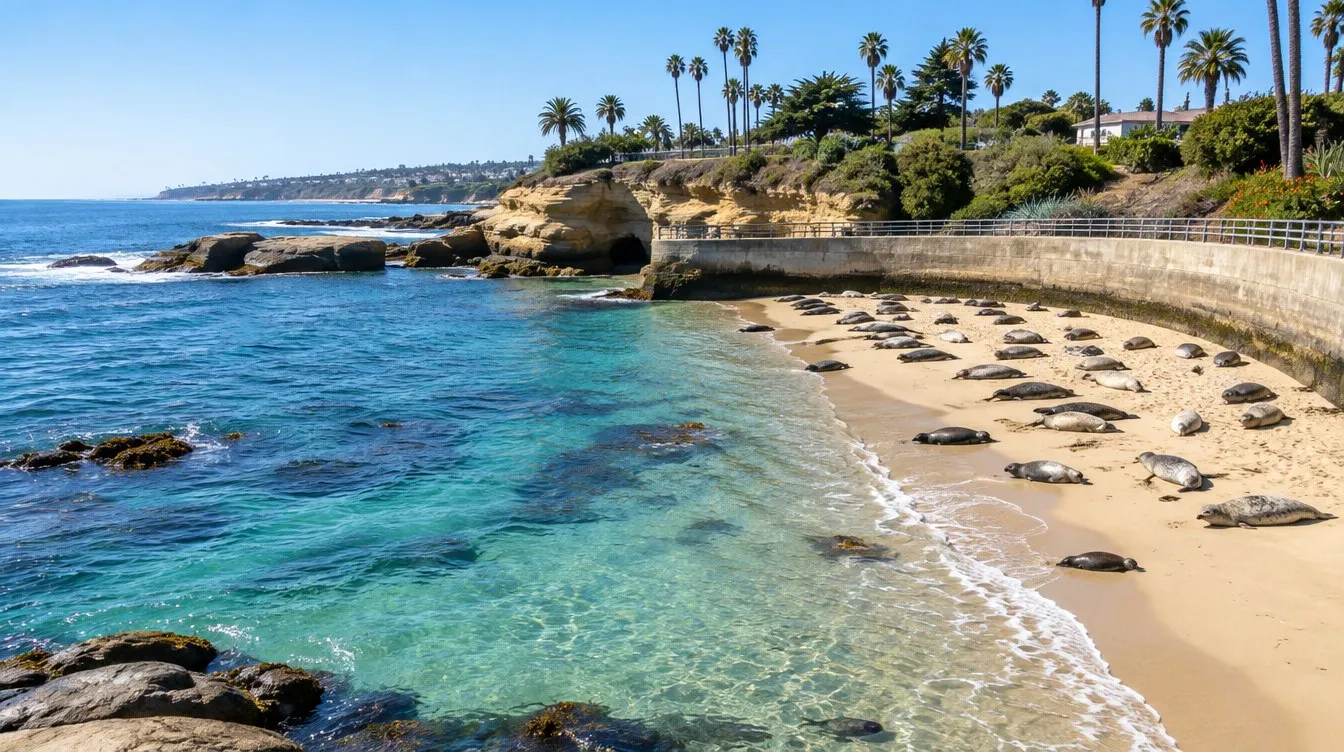
La Jolla Cove is a tiny, lifeguarded beach below Ellen Browning Scripps Park, and it’s open to the public for swimming, snorkeling and watching sea lions on the rocks. A five-minute walk south, Children’s Pool is where harbor seals haul out. Its sand is closed every year from December 15 to May 15 for pupping season, though you can watch from the seawall any time. Parking is free on the street, but limited, so arrive early.
La Jolla Cove, Children’s Pool and Point La Jolla: what’s where
This stretch of La Jolla’s coast has three spots close together, and each has different rules. Walking south to north along Coast Blvd:
| Spot | What you’ll see | Access in 2026 |
|---|---|---|
| Children’s Pool | Harbor seals (and pups in winter–spring) | Sand closed Dec 15–May 15. Viewing from the seawall and bluff year-round |
| Ellen Browning Scripps Park | Grassy clifftop park, ocean views | Open |
| Point La Jolla and Boomer Beach | California sea lions on the rocks | Year-round closure. View from behind barriers |
| La Jolla Cove | Small beach, snorkeling, sea lions nearby | Open, lifeguarded |
| Sunny Jim Cave (Cave Store) | Sea cave reached by tunnel stairs | Paid entry |
The coastal path links all of them in about 15 minutes of easy walking, which makes this one of San Diego’s best free outings.
Children’s Pool beach and the seals
Children’s Pool is a small sandy beach protected by a curved concrete seawall. It was built to make a calm swimming area for kids, but over time sand filled in much of the area behind the wall, and harbor seals took it over. The City of San Diego now describes it as a popular harbor seal viewing area where seals, and sometimes sea lions, rest year-round. Old pages call it “Seal Rock” or the “children’s beach,” and they mean this spot.
The seasonal closure
The City closes the beach to public access from December 15 through May 15 every year during harbor seal pupping season. In 2026 the first pup was reported on January 20, and volunteers expected 50 to 60 pups by mid-March, with nursing lasting until mid-May, according to FOX 5 San Diego. Mid-winter to spring is the best time to see newborns from the walkway. Don’t step onto the closed sand, even for a photo.
Outside the closure, the beach is technically open, but seals are still there and federal rules against disturbing them still apply. The page also warns that the reefs offshore can create strong currents, especially in big surf. Dogs, alcohol, glass and smoking aren’t allowed.
La Jolla Cove and the sea lions
Just north of Scripps Park, La Jolla Cove is a pocket beach between sandstone cliffs. It faces north, which keeps summer surf small. It is one of nine San Diego beaches with a permanent lifeguard station, and it has restrooms and showers nearby, according to the City’s Cove page.
The sea lions mostly gather on the rocks at Point La Jolla and Boomer Beach, right next to the Cove. The City changed that area’s closure from seasonal to year-round after a 2023 council vote. News coverage at the time described the permit as a seven-year closure. Signs read “Area closed, no entry,” and violators can be cited. The water is still open there for swimmers only.
The Cove itself is not closed. In a December 2025 update to the Coastal Commission, the City said keeping the Cove open is a priority. It also described park rangers on daily duty with hourly safety announcements, and repeated the National Marine Fisheries Service advice to stay at least 50 yards from seals and sea lions. Sea lions can bite and sometimes charge people who get too close, especially mothers with pups. Use a zoom lens and give them space.
Snorkeling, swimming and kayaking
Snorkeling at the Cove
The Cove sits inside the San Diego-La Jolla Underwater Park Ecological Reserve, a no-take zone where fishing and removing anything are banned. On calm days, the City says, visibility can exceed 30 feet. Bright orange garibaldi are a common sight around the rocks. Enter from the sand at the Cove, stay near the lifeguard tower and check the surf report first. Winter swells can make the Cove rough. Summer and early fall usually bring the calmest, warmest water.
Kayak tours of the sea caves
The cliffs east of the Cove hold seven sea caves, and kayak tours are the classic way to see them. Most tours launch from La Jolla Shores, about a mile east. For example, Bike & Kayak Tours runs a two-hour trip with about 90 minutes on the water, open to ages 5 and up. Not every cave is reachable on every day, since access depends on ocean conditions. The same paddle often passes sea lions, and from May to October you may see leopard sharks in the shallows off the Shores.
Sunny Jim Cave stairs
If you’d rather stay dry, Sunny Jim Cave is the one sea cave you can reach on foot. A tunnel dug in 1902 leads from inside The Cave Store at 1325 Coast Blvd down roughly 145 steps to a viewing platform in the cave. Its site lists adult admission at $13 and youth (3 to 17) at $7, with tours running 9 a.m. to 4:30 p.m. Under-18s need an adult or a signed parent letter. The stairs are steep and can be slippery, so wear closed-toe shoes.
Parking near La Jolla Cove
Parking is the hardest part of a Cove visit. There’s no dedicated beach lot. Your options:
- Free street parking on Coast Blvd above the Cove and on Village streets like Prospect, Girard and Herschel. Most spaces have posted 2- to 3-hour limits that are enforced, according to a 2026 third-party parking guide. Read each sign.
- Paid garages and lots along Prospect Street, plus valet stands, are about a 5- to 10-minute walk away. Rates vary, so check at the entrance.
- Timing: On weekends and summer days, curb spaces fill early. Arriving before about 9 a.m. or after 4 p.m. makes a big difference.
- Rideshare: Drop-off on Coast Blvd by Scripps Park or on Prospect Street avoids the hunt. Tour buses have an interim green-zone drop-off at Girard Avenue and Coast Blvd.
Tips for visiting
- Check the tides. Low tide exposes tide pools near the Cove and toward Children’s Pool. Watch your footing on the slick rock.
- Expect the smell. The bird and sea lion guano on the cliffs is strong on warm, still days. It’s part of the experience.
- Go early for photos. Morning light on the seals and the clifftop park is soft, and the crowds are thinner.
- Bring water shoes for rocky entries and a light layer for the breeze on the bluff.
- Respect closures. Rangers and docents are on site. Disturbing marine mammals is a federal offense.
Who it suits and nearby pairings
The Cove suits almost everyone. Families can watch seals for free, snorkelers get some of the clearest water in Southern California, and photographers get the bluffs and the sunsets. People who’d rather not climb down to the sand can still see the seals from the seawall walkway and the paved paths in the park.
Make a day of it with lunch in La Jolla Village, then head north up the coast to Torrey Pines. Check that guide for current trail status first. If the kids want more marine animals, SeaWorld is about 20 minutes south. For gentler swimming beaches, see our San Diego beach guide.
Frequently asked questions
When is Children's Pool beach closed?
The City of San Diego closes the sand at Children's Pool to the public from December 15 through May 15 every year for harbor seal pupping season. You can still watch the seals from the seawall walkway and the bluff above during the closure.
Is La Jolla Cove open to the public?
Yes. La Jolla Cove beach and Ellen Browning Scripps Park are open, and the City has said keeping the Cove open is a priority. The nearby Point La Jolla and Boomer Beach area is under a year-round closure to protect sea lions, so you can only view it from behind the barriers.
Where is the best parking near La Jolla Cove?
Free street parking along Coast Blvd and in the Village has posted time limits, often 2 to 3 hours, and it fills early on weekends. Paid garages and lots along Prospect Street are the backup. Arrive before about 9 a.m., or use a rideshare.
What is the difference between the seals and sea lions in La Jolla?
Harbor seals gather at Children's Pool. They are spotted, have no visible ear flaps and wriggle on their bellies. California sea lions crowd the rocks at Point La Jolla and the Cove. They are brown, have ear flaps, bark loudly and can walk on their flippers. Federal guidance says to stay at least 50 yards away from both.
How do you get to the La Jolla Cove sea cave by stairs?
Sunny Jim Cave is reached through a tunnel inside The Cave Store at 1325 Coast Blvd. Its own site lists about 145 steps each way and adult admission of $13 ($7 for ages 3 to 17), with tours running 9 a.m. to 4:30 p.m.
Can you snorkel at La Jolla Cove?
Yes. The Cove lies inside the San Diego-La Jolla Underwater Park Ecological Reserve, where fishing and taking anything are banned. It's a lifeguarded beach, and on calm days visibility can top 30 feet. Summer and early fall usually have the calmest water.
Hours, prices and event dates change. Confirm with the venue or organizer before you go.